
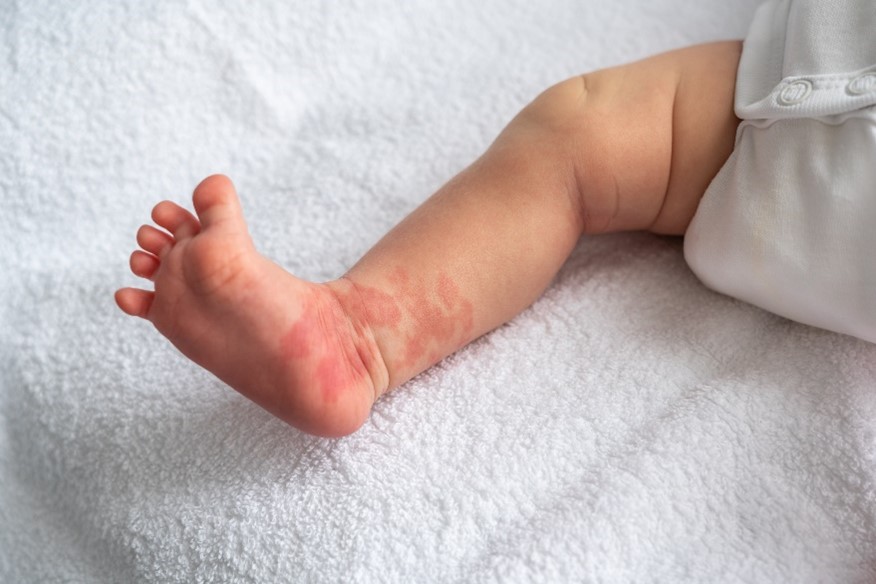
Dysbiosis, defined as a disruption in the normal microbial balance, is commonly observed in inflammatory skin diseases. It is characterized by reduced microbial diversity, overrepresentation of specific species, and altered community composition1.
Eczema is one of the most common inflammatory skin conditions worldwide, affecting approximately 15–30% of children and 2–10% of adults. Notably, around 60% of cases manifest within the first year of life2. Emerging research highlights important links between early-life gut and skin microbiome development and the subsequent risk of eczema.
The Developing Microbiome in Early Life
- The human microbiome undergoes critical development during the first 1000 days of life, a sensitive period when environmental factors strongly influence microbial colonization.
- Initial colonization begins at birth. Vaginal delivery facilitates transfer of maternal vaginal and gut microbes, while cesarean delivery favors colonization by skin and environmental microbes, potentially altering microbiome trajectories3.
Microbiome Disruption Mechanisms
The infant microbiome is fundamental to human health, with its early assembly largely shaped by maternal microbial transfer. This process can be disrupted by several factors:
- Cesarean delivery
- Perinatal antibiotic exposure
- Formula feeding
These factors have been associated with an increased risk of metabolic and immune-mediated diseases due to altered microbial colonization patterns4.
Microbiome Alterations Associated with Pediatric Eczema
Gut Microbiome Signatures
- The gut microbiota supports barrier integrity by enhancing tight junction proteins and producing immunoregulatory metabolites such as short-chain fatty acids (SCFAs).
- Beneficial microbes like Bifidobacterium and Lactobacillus strengthen the intestinal barrier, while SCFAs, particularly butyrate, promote epithelial function and regulatory T cell–mediated anti-inflammatory responses.
- Dysbiosis leads to increased pathogenic bacteria and pro-inflammatory mediators, contributing to impaired barrier function and increased intestinal permeability (“leaky gut”), which is increasingly linked to atopic dermatitis5.
Skin Microbiome Dysbiosis
The skin microbiome exhibits distinct alterations in eczema:
- Reduced overall microbial diversity
- Overgrowth of Staphylococcus aureus
- Depletion of beneficial genera such as Cutibacterium (formerly Propionibacterium) and Corynebacterium
Emerging evidence suggests that early microbial signatures on the skin may help predict the onset of atopic dermatitis6.
Clinical Implications
- Promoting healthy microbial colonization in early life may reduce the risk and severity of eczema.
- Strategies include supporting skin barrier function, minimizing unnecessary antibiotic exposure, and encouraging practices that foster beneficial microbiota.
- Emerging microbiome-based therapies represent a promising area for future intervention.
Conclusion
Dysbiosis in early life plays a significant role in the development of eczema through complex interactions between the gut, skin, and immune system. Understanding these mechanisms provides opportunities for preventive strategies and targeted therapeutic approaches in pediatric dermatology.
References
- Okamoto H, Li S, Nakamura Y. Skin dysbiosis and quorum sensing in atopic dermatitis. JID Innov. 2025;5(4):100377.
- Nemeth V, Syed HA, Evans J. Eczema. StatPearls. 2025.
- Chaudhary PP, O'Laughlin B, Kumar PS, et al. Vaginal delivery and microbial colonization resistance. Clin Transl Med. 2023;13(12):e1506.
- Mueller NT, Bakacs E, Combellick J, et al. Infant microbiome development. Trends Mol Med. 2015;21(2):109–117.
- Hou B, Shao H, Yuan D, Tham EH. Skin and gut microbiome in atopic dermatitis. Pediatr Allergy Immunol. 2025;36(12):e70265.
- Tham EH, Chia M, Riggioni C, et al. Skin microbiome in pediatric atopic dermatitis. Allergy. 2024;79(6):1470–1484.