
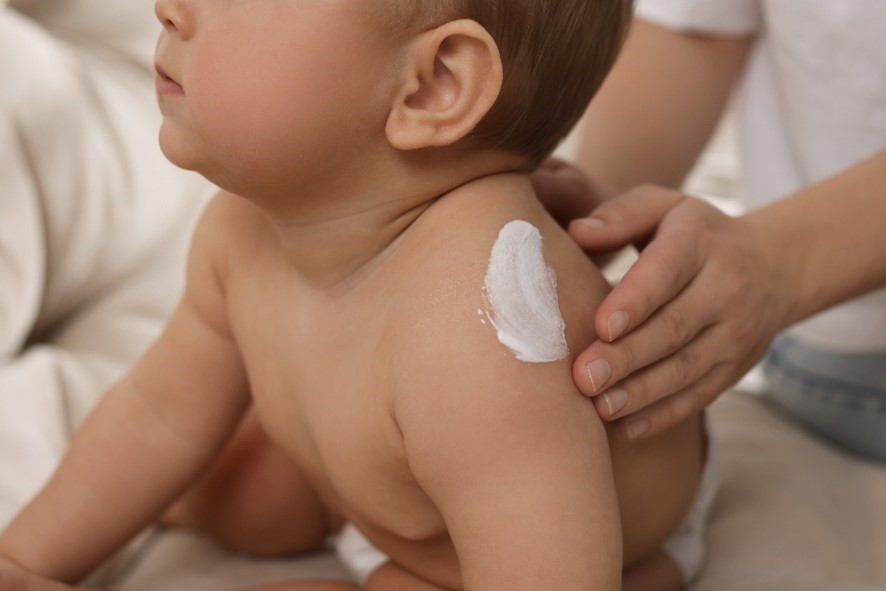
Atopic dermatitis is a common inflammatory skin condition characterized by dry skin, eczema, and intense itching. Its clinical presentation varies with age and is frequently associated with other atopic conditions such as allergic asthma, allergic rhinitis, and food allergies. In many individuals, atopic dermatitis begins during infancy, making early life a critical window for intervention.1
The onset of atopic dermatitis is strongly associated with disruption of the skin barrier. Infant skin is thinner, more permeable, and continues to mature during the first year of life, making it more vulnerable to increased water evaporation, as well as irritants and allergen exposure. As barrier impairment often occurs before clinical inflammation becomes apparent, early skin care approaches that reinforce barrier integrity—particularly regular emollient use—have gained increasing interest for their potential to reduce the risk of atopic dermatitis.
Role of Early Emollient Use
- Daily emollient use is a key component of atopic dermatitis management.
- Early-life emollient application supports stratum corneum development and barrier integrity.
- Improves skin hydration and reduces transepidermal water loss.
- Limits skin permeability to irritants and allergens.
- May help reduce exposure to environmental triggers linked to inflammatory skin disease2.
Key Biological Effects
- Emollients help reduce reliance on topical pharmacotherapy, including glucocorticosteroids, thereby lowering the risk of steroid-related adverse effects such as endocrine disruption, cataracts, and systemic complications3.
- Strengthen the skin barrier by improving stratum corneum cohesion and reducing transepidermal water loss.
- Support lamellar lipid organization through physiologic lipid supplementation.
- Limit allergen and irritant penetration, reducing skin inflammation.
- Clinical studies show that daily emollient use initiated in early infancy is associated with a lower incidence of atopic dermatitis during the first year of life.
- Consistent improvements in skin hydration and overall barrier function have been reported.
- Preventive benefits are most pronounced in infants at higher atopic risk, including those with a family history of allergic disease.
Conclusion
Early emollient use is a simple, safe, and accessible approach to supporting infant skin barrier development. By improving hydration and reinforcing barrier function, early skincare may contribute to reducing the risk and severity of atopic dermatitis during infancy, supporting healthier long-term skin outcomes.
References
- Lugović-Mihić L, Meštrović-Štefekov J, Potočnjak I, et al. Atopic Dermatitis: Disease Features, Therapeutic Options, and a Multidisciplinary Approach. Life (Basel). 2023;13(6):1419.
- Ní Chaoimh C, Lad D, Nico C, et al. Early initiation of emollient use for prevention of atopic dermatitis in high-risk infants (STOP-AD trial). Allergy. 2023;78(4):984–994.
- Kowalska MK, Orłowska SM, Bednarczyk Ł. Role of emollients in atopic dermatitis. Applied Sciences. 2024;14(18):8315.
https://doi.org/10.3390/app14188315